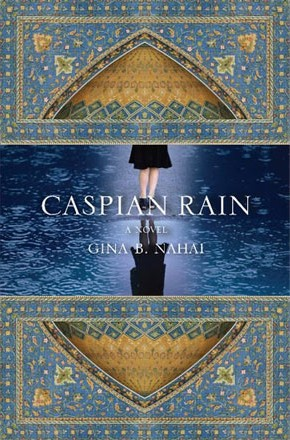
Caspian Rain
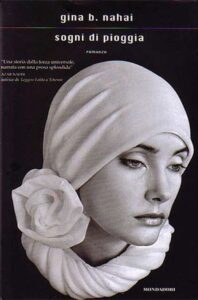
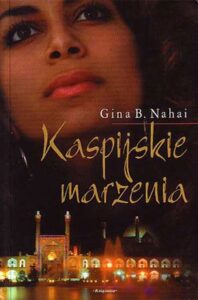
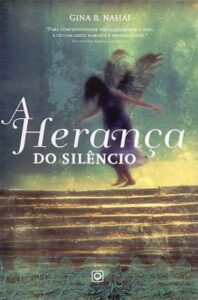
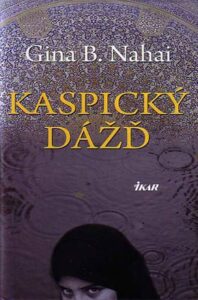
―Nominated by MacAdam Cage Publishing for the National Book Award, 2007 ―Nominated by MacAdam Cage Publishing for the Pulitzer Prize, 2007 ―Selected as “One of the Best Books of the Year,” Chicago Tribune, December 2007 ―Selected as “One of the Best Books of the Year,” San Francisco Chronicle, December 2007 In the decade before the Islamic Revolution, Iran is a country at the brink of explosion. Twelve-year-old Yaas is born in Tehran, into an already divided family: Her father is the son of wealthy Iranian Jews who are integrated into the country’s upper-class, mostly Muslim, elite; her mother was raised in the slums of South Tehran, one street away from the old Jewish ghetto. Yaas spends her childhood navigating the many layers of Iranian society. Her task, already difficult because of the disparity in her parents’ worldview, becomes all the more critical when her father falls in love with a beautiful woman from a noble Muslim family. As her parents’ marriage begins to crumble, and the country moves ever closer to revolution, Yaas is plagued by a mysterious, terrifying illness. But despite her ailment, when she learns that her father is about to abandon her and her mother—to immigrate to America with his mistress—Yaas is determined to save herself and her family. At once a cultural exploration of an as-yet unfamiliar society, and a psychological study of the effects of loss, Caspian Rain takes the reader inside the tragic and fascinating world of a brave young girl struggling against impossible odds.

Praise
“This novel is nothing less than a literary sensation, not only because it revives Iran’s past in a heavenly precise prose, but also since we will all too soon desperately look for books which explain this country. To truly understand Iran, you have to read this novel.”
— Frankfurter Allgemeine Zeitung
“Entrancing…Caspian Rain is a beautiful study in disappointment and ineffable loss, in the conflict between duty and desire. Nahai shows her characters just as they are, damaged. They are keenly aware of how they’d like to change their lives – and of how limited their options really are.”
— Los Angeles Times
“Nahai evokes even peripheral characters in vivid detail: the daughter of Argentine exiles (and suspected Nazis) blares tango music from her window and shows up at her parents’ funeral with a hot-pink flower behind her ear; a former student activist, broken under torture by the secret police, scavenges for dead women’s hair…”
— New Yorker
“A glimpse into a largely alien culture. Nahai tells [the] story with elegance and insight.”
— New York Times Book Review
“Nahai’s power as a storyteller flows from her desire to weave the brutal facts of modern Iranian history with fantastic narratives of familial rupture and political displacement. American readers will be absorbed by [her] colorful evocation of the characters. From her clear-eyed yet deeply emphatic perch in the New World, Nahai sounds the emotional costs of exile as she explores the trauma of loss for her fellow émigrés. She is, after all, that subculture’s finest chronicler.”
— Chicago Tribune
“Beautiful and haunting…Nahai’s narrative skill and linguistic talent shine.”
— San Francisco Chronicle
“Heartbreakingly captivating, Nahai’s novel nonetheless evokes hope…darkly enticing…Set in pre-revolution Iran, this somber, beautifully written novel is a look into the unfulfilled lives of a hugely dysfunctional Iranian Jewish family and a far-reaching story of the ever-persevering human spirit…Nahai’s writing is poetic, with provocative turns of phrase over which to pause…”
— Miami Herald
“Nahai deftly creates the smells and daily routines of an old Tehran neighborhood…[and] a colorful cast of quirky characters.”
— Washington Post
“Caspian Rain guides readers deep into the inner sanctum of one painfully divided family in the years leading up to Iran’s Islamic Revolution… Nahai has you hooked from start to finish…Her unusual yet effective narrative flow portrays this world in a way that leaves behind the typical ‘veils and misogyny’ stereotypes most Americans know from contemporary Iran. And yet, Nahai’s story gives colorful narrative to the cultural forces at play in the years leading up to the arrival of Islamic fundamentalism in this most misunderstood country…an uncommonly poignant tale. Caspian Rain is an English major’s book—even the smallest aside reinforces the book’s overarching themes of loss and exile. Each detail, each character Nahai conceives is, as Yaas notes, ‘Tragic to the core, but also mesmerizing.’”
— Chicago Sun-Times
“Readers are allowed a singular look into the world of Iranian Jews and their hierarchy… This lyrical and literary novel is beautifully written.”
— USA Today
“Vivid and accurate… In Caspian Rain Gina B. Nahai demonstrates that suffering is a cultural imprint…Perhaps Nahai’s intention is best illuminated by the naming of her characters. In Persian, Omid means Hope, Bahar means spring or renewal, and Yaas means Poet’s Jasmine. But Yaas also means sorrow. It is our job to understand the relationship of the three, and to unravel the web they’ve woven around loss.”
— San Jose Mercury News and Contra Costa Times
“This tender story, set during the shah’s rule before the Iranian revolution, has the inevitability of Greek tragedy… [Nahai] offers readers a striking recollection of the sounds, smells and landscapes of her native land. This is a beautifully written picture of a culture caught between the modern West and ancient Islam.”
— Providence Journal
“Like drops of acid, Gina Nahai’s words burn the pages of this moving novel about the fate of women in pre-revolutionary Iran. Nahai’s alluring poetic style draws us into the lives of her female characters. We identify with their hopes and desires, but we also sense their frustration. Beneath the novel’s calm and captivating prose is a powerful testament to Iranian women’s fight against oppression.”
— Ms. Magazine
“…beautifully rendered, with passages that urge rereading… Nahai is a born storyteller. Her novel resonates with an almost audible vibration, as though she had curled up next to you on a rainy evening and begun to spin her tale.”
— Portland Tribune
“Spirit, a mystical tone, sharp social analysis and telling detail inform Caspian Rain, Gina Nahai’s fine novel about Iran in the ’70s, before mullah rule replaced the monarchy of Shah Mohammed Reza Pahlavi in the Islamic Revolution…vivid…singularly poignant.”
— Fort Worth Star-Telegram
“Nahai’s compelling novel depicts one family’s tale of alienation and loss… a vivid study of a broken home.”
— Entertainment Weekly
“The interlocking tales read like myths; Nahai’s writing is compassionate even as it indicts.”
— Los Angeles Magazine
“Caspian Rain once more proves Gina B. Nahai’s ability to create through her wonderfully lyrical prose a fictional world that, while rooted in a particular culture and history, is universally relevant and appealing.”
— Azar Nafisi, author of Reading Lolita in Tehran*
“In exquisite, poetic vignettes, Caspian Rain tells the intense story of a mother and daughter in search of approval within upper-class Iranian social circles. Ultimately though, what they struggle towards is acceptance from one another. Nahai’s writing is a graceful balancing act between the lush and the stark. Her gorgeous sentences cut to the bone.”
— Christina Garcia, author of Monkey Hunting and Dreaming in Cuban*
“Gina Nahai’s beautifully written novel Caspian Rain is evocative and poetic, with striking images that remain in the mind long after they are read. It is also a heart-wrenching examination of the tragedies of women caught in the net of gender, history, family secrets and the unbending laws of high society. But ultimately it is a celebration of the human spirit — the moments of joy and courage and risk-taking that make all our lives worth living.”
— Chitra Divakaruni, author of Mistress of Spices and Queen of Dreams*
“Lovers of the art of storytelling should know Gina B. Nahai. Much more than a fascinating, page-turning glimpse into the tribes and classes of Iran, Caspian Rain is an exquisite novel which, like a Ghost Boy on a bicycle, will continue to magically haunt its readers long after its ending.”
— Sandra Tsing Loh, author of Depth Takes a Holiday and A Year in Van Nuys*
“Gina Nahai, a gifted storyteller with a unique and powerful voice, invites us into a strange, unsettling but ultimately beguiling world, a place of both pain and enchantment. Remarkably, she allows us to glimpse the hard realities of life in contemporary Iran in a new and unaccustomed light while, at the same time, she shows us that the innermost truths of the human heart are truly universal. Caspian Rain is both timely and timeless, an important book that comes at just the right time.”
— Jonathan Kirsch, author of A History of the End of the World*
“In Caspian Rain, Gina Nahai takes us on a privileged journey into an Iran a contemporary traveler can only hope to know through fiction — an Iran before the Islamic Revolution where women could aspire to independence and dream of larger lives. Through the eyes of her 12-year-old heroine, we see a whole society mirrored, a society enmeshed in superstition but struggling to emerge into modernity. A heroine — and a book — to embrace. I was mesmerized.”
— Elizabeth Forsythe Hailey, author of A Woman of Independent Means*
“If writers do indeed write what they know, then Gina Nahai has a PhD in the human heart. Her characters inhabit their culture and their time so profoundly that her readers do too; from moments of magical realism to years of anxious drifting and struggling, Nahai’s characters are as much in search of themselves as the turbulent nation they live in.”
— Patt Morrison, author of Rio L.A., Tales from the Los Angeles River*
“The writing in Caspian Rain is so lyrical and flowing that you almost forget just how hard life can be for someone who is doomed to forever be an outsider. Bahar, who marries above her station, finds that she is isolated from both the family and society she marries into and the family and friends she left behind…Nahai has written a novel that illuminates a complex society while offering up a very specific and moving story of one woman’s desire to maintain her dignity and tenuous standing within that diffident society.”
— Laura Hansen, Bookin’ It (Little Falls, MN)